Search

oysters and arugula

Category

Cooking

Mediterranean Inspiration

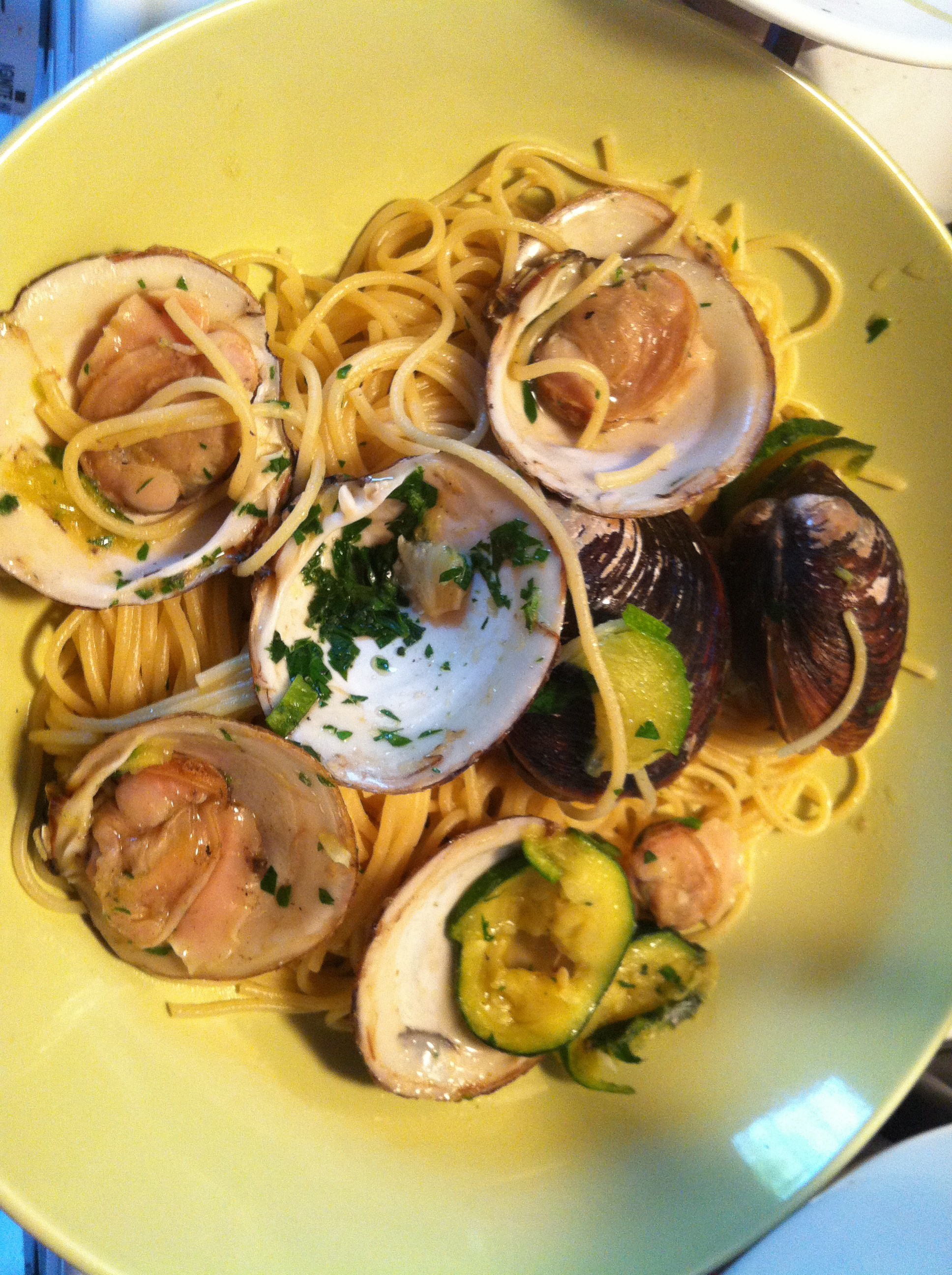
Between fish tacos and margaritas, I got quite a bit of reading in during our visit to SayulitaMediterranean Summer by David Shalleck, the story of his summer as a chef on a private sailing yacht in the Mediterranean, was a perfect beach read, except that it made me want to race to my kitchen.  But on Sunday night, when I had retrieved my daughters from their annual week in Massachusetts with my parents, it was time for David’s Linguine with Clams and Zucchini.  Additionally, Greta informed me as we were driving home from our Connecticut rendezvous spot that she was feeling the need to do a little baking.

“Can we do that, Mommy?  Can we bake something?”

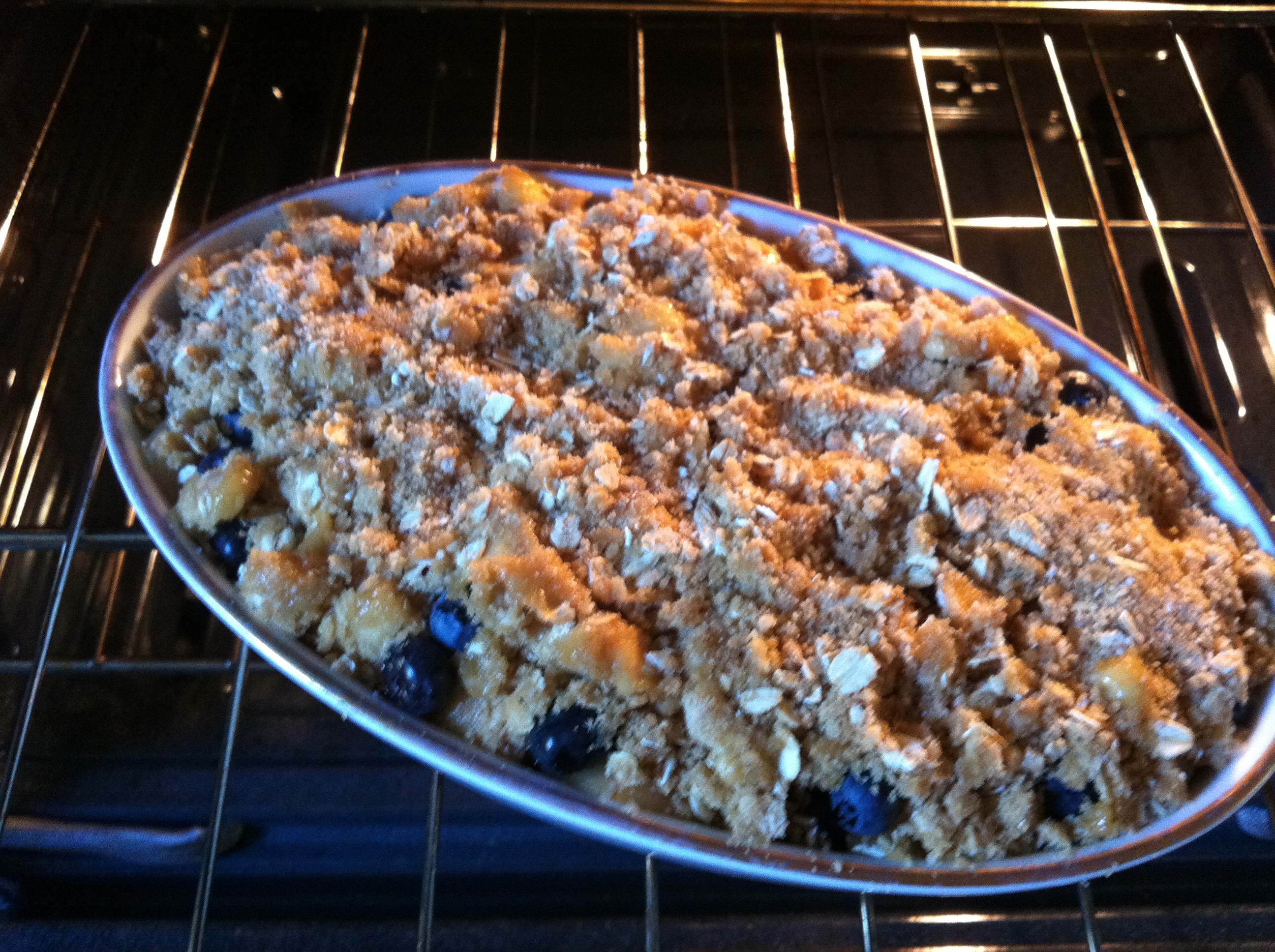
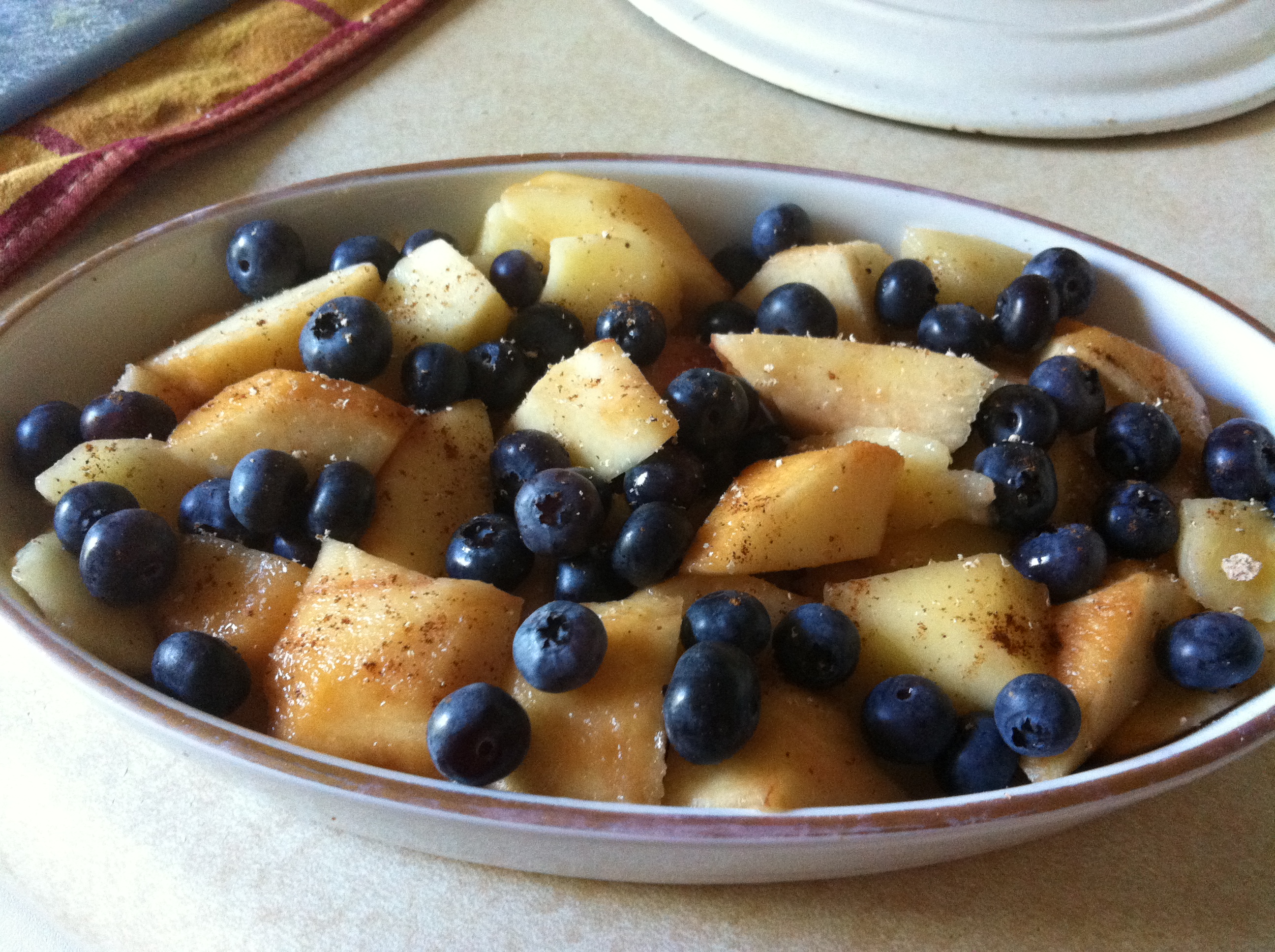
“Well, I picked up some nectarines at the farm stand this morning.  How about a nectarine crumble?  And we could use some of those blueberries you’ve got there from your blueberry picking expedition with Nana and Grampa.  How’s that sound?”

“Good!”

The thing that made me want to give this clam recipe a try, was the idea that the almost over-cooked zucchini provides a coating that allows the sauce to better adhere to the linguine.  (Plus, as you know, I’ve just got a thing for linguine and clams.  New twists always welcome!)   You cook the zucchini in garlic and a nice amount of olive oil, remove the zucchini, and then cook the littlenecks (I had to use mahogany clams from Maine on this night) in the zucchini-garlic-flavored oil.  Add some hot red pepper (which I had to forgo in consideration of my daughters’ sensitive palates) and parsley, toss it all (including zucchini) together, using a bit of pasta water to make a bit more of a sauce, and va bene!

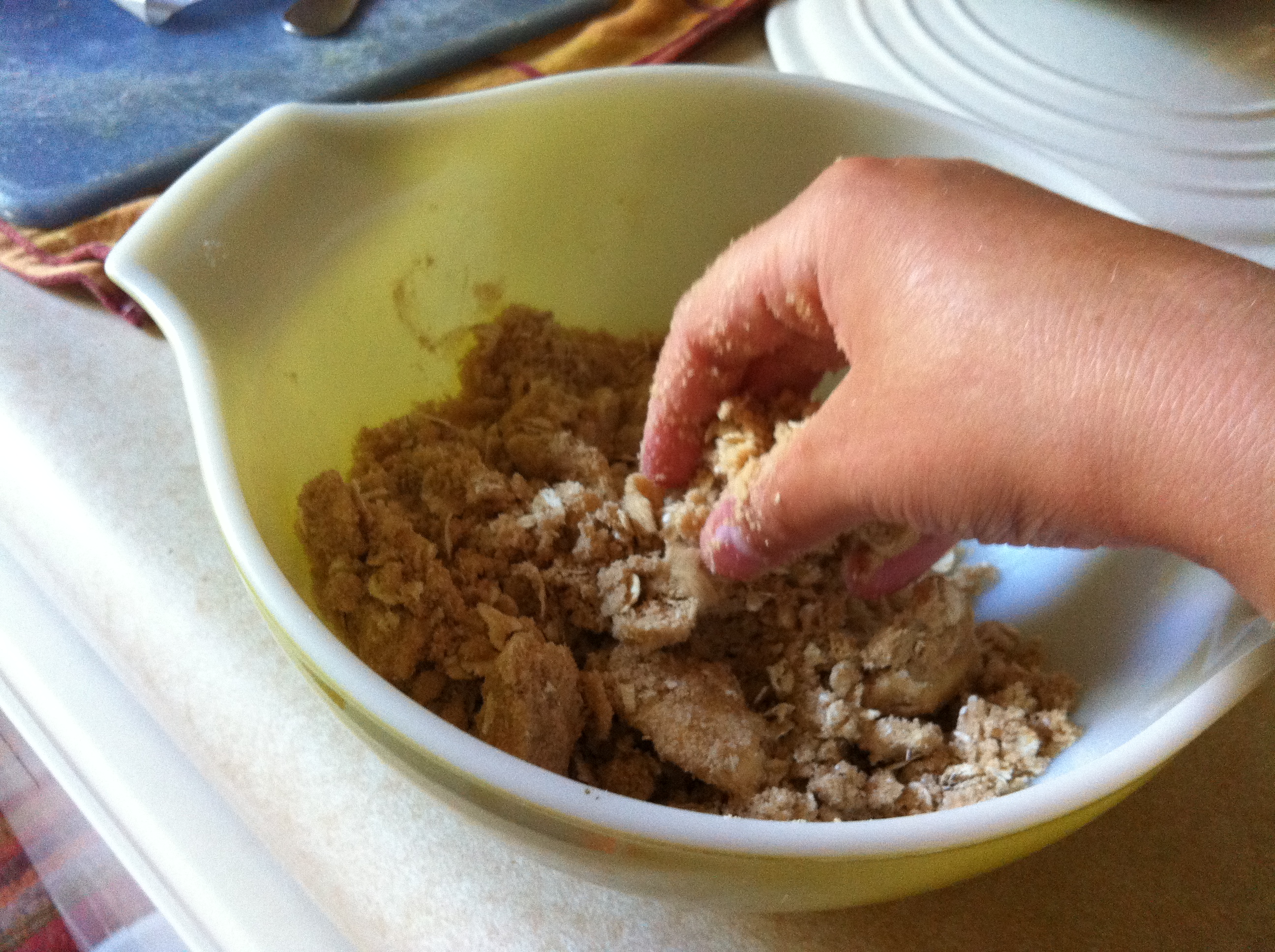
As for the crumble, we peeled the nectarines, added the blueberries, and Greta did her magic with cinnamon and grated nutmeg.  She then mixed together some whole wheat flour, oats, brown sugar, dash of salt, and pinched it all together into crumbles with half a stick or so of butter.   Many would insist that vanilla ice cream is the only appropriate accompaniment, but I prefer something to cut the sweetness a bit – honeyed yogurt or creme fraiche will do the trick.  If you’ve got some heavy cream in the fridge, how about that?


Sometimes There Really Isn’t Room for Improvement

There’s not a thing that can improve this.  Some of you may argue.  You may want a baguette or mozzarella or homemade mayo.  But for me, here’s perfection:

Just-picked, fat and juicy tomato

A slathering of Hellmann’s

Few leaves of basil

Sea salt, ground pepper

Arnold “Oat Nut” bread

Dinner for an August Night in June

The schools were closing early due to the 100 degree heat, and a sweet little bag of key limes became the inspiration for dinner.  Steak fajitas with guacamole, rice and beans seemed the perfect dinner for the south of the border-type heat we were experiencing.

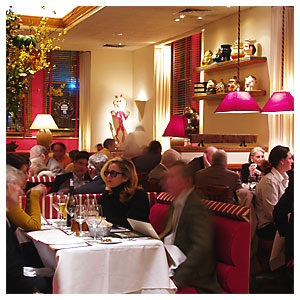
I don’t think I’ve mentioned this, but for a brief period of time I worked in the garde manger station of David Burke’s now-defunct Park Avenue Café .  We were responsible for cold appetizer preparation, and for a few hot summer days, this included a special of guacamole.

Park Avenue Cafe, circa 1997

A quick search on Epicurious produces 48 guacamole recipes.  Among the several versions found on The California Avocado Commission website is guacamóle auténico, which calls for cumin, tomato, sweet white onion, Serranos, cilantro, and lime juice.  Meanwhile, back in the kitchen we were told that Chef Burke’s version was the authentic one, and being young and impressionable, I believed it and have stuck by it.  Our version called for nothing more than salt, lime juice, and cilantro.   I seem to recall that some chopped tomato may have garnished the plate, but it certainly wasn’t incorporated into the guacamole prior to serving.

Aside from ingredients, another place where the guacamole camps diverge is on the question of texture.  There are some folks out there who apparently like their guacamole to have the texture of Cool Whip.  Should you find yourself invited to my home for margaritas, the guacamole I will serve you will be chunky.  The preparation of the avocado is, in fact, my favorite part of guacamole-making.  After scoring the avocado in half the long way, twisting each half in opposite directions to release one side from the pit, you can (carefully) smack the heel of your chef’s knife into the pit and twist to remove the pit from the other half.  You can then take a smaller knife and score the flesh of the avocado diagonally in one direction, then the other, forming a diamond pattern. Now, take a spoon and, pressing the back of the spoon against the shell, you can scoop out the flesh, and voila!  Diced avocado!  (For those visual learners among my reading audience, the next time I have avocados on hand, I will take a few photos of this process and add them here.)

One thing about which I’ve learned that my sous chef friends were mistaken, however, is the notion that submerging the pit in your guacamole will prevent discoloration.  Thanks to the thorough experiments of Harold McGee, author of The Curious Cook, I now know that the best way to prevent browning (which is caused by the interaction of oxygen with an enzyme in the avocado), is to lay plastic wrap directly on the exposed surface, being sure to eliminate all air bubbles.  While the pit will protect the small bit that it touches from browning, Harold tells us that a light bulb would perform the same function.  Nothing magic about the pit, and plastic wrap does a more effective job.

Margaritas, anyone?

Happy Mothers’ Day

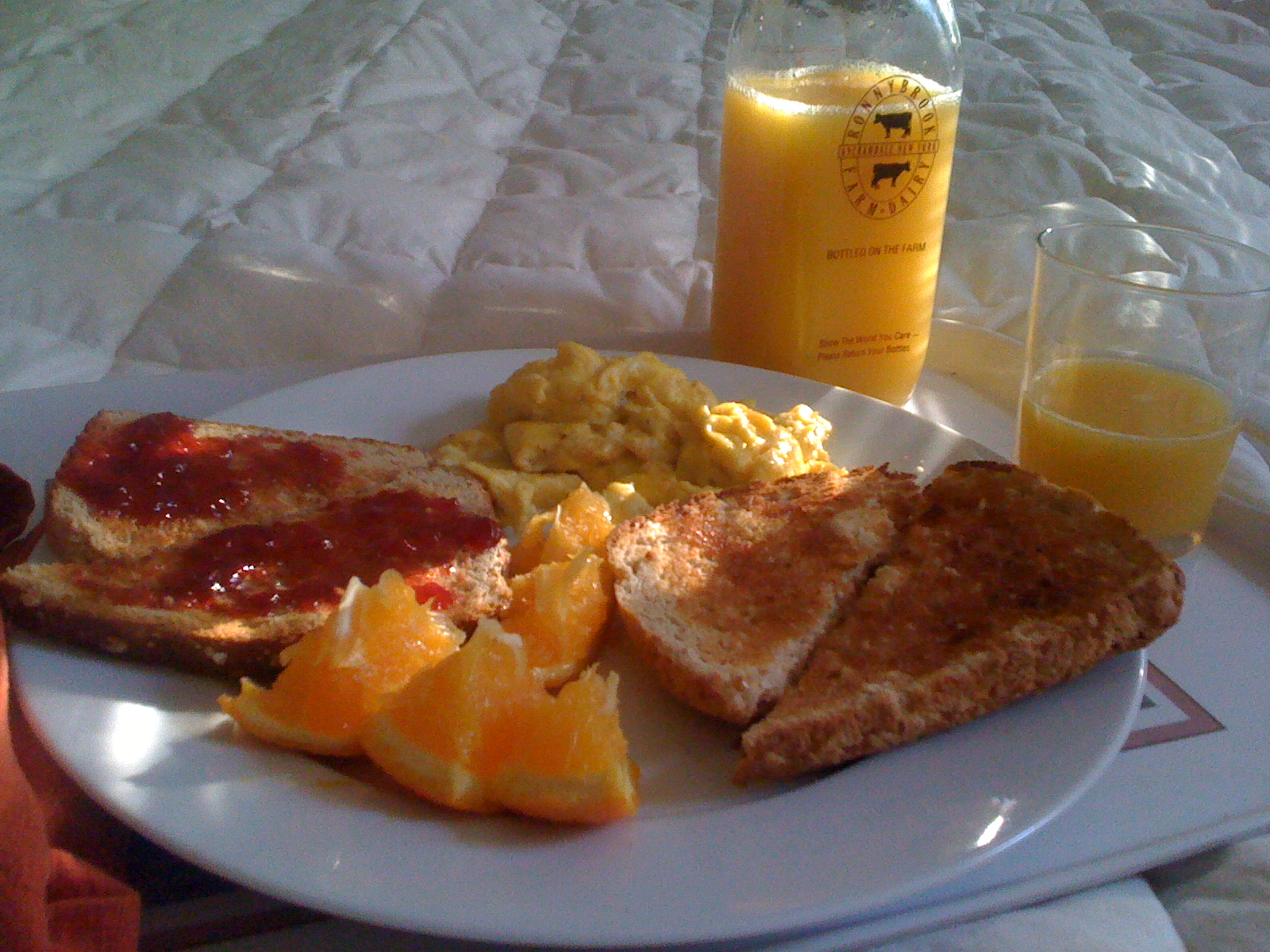
At 7:45 this morning, I was awoken to a chorus of “Happy Mothers’ Day, Mommy!” and the sight of two beaming girls holding a breakfast tray.  For the past several days, 9-year old Greta had been saying that she wanted to make scrambled eggs for me for Mothers’ Day, and while telling her what a lovely thought that was, I had tried to encourage something that wouldn’t involved the stove top, since the thought of the girls in the kitchen with an open flame, while I slept, was a bit unnerving.

“We used Julia’s recipe, Mommy!”

“Julia?”

“Yes, Julia Child!”

How fantastic is that?!!  My daughters had turned to Mastering the Art of French Cooking for their first solo cooking endeavor.  Could I be more proud?

Considering how well that had all gone, I reasoned that it would be ok to ask Anna to put a kettle on, for my coffee, while I read their cards.

A few minutes later, after I had opened a gift of homemade vanilla-scented sugar and olive oil scrub, I realized I had been hearing a periodic clicking sort-of sound and asked Anna to take a peek in the kitchen to be sure everything was ok on the stove.  “Oh, no! Oh, no!” is what Greta and I heard seconds later.  I ran to the kitchen half expecting to find the room ablaze, to discover the milk bottle we have been using as a water carafe, sitting on the stove top, directly beside the gas burner, still standing but cracked into three pieces.  Though the girls were fond of the bottle, fortunately this was no catastrophe.  In fact, it provided a “teaching” moment, as well as an opportunity to practice my nursing skills.

Because as soon as I picked up the bottle, it fell to pieces and at least one tiny shard ended up on the floor, and soon after, in Anna’s foot.  Thus I found myself, seated by the window, sipping my coffee, tweezers in hand, extracting a sliver of glass from Anna’s tender foot. What’s a Mothers’ Day without a little mothering!

Sunday Night Pasta

After a weekend road trip to visit friends in the nation’s capitol (little did we know the intrigue that was afoot as we strolled past 1600 Pennsylvania Avenue on Saturday afternoon), which included the consumption of mussels in a cilantro and coconut milk sauce at Bertha’s; baseball-size crab cakes from Faidleys Seafood; home-roasted salmon followed by berries with a brown sugar, amaretto sour cream sauce; fried artichoke hearts, NY strip steak, and Belgian beer;  and finally Sunday-morning eggs Benedict, by our return home on Sunday evening, we were ready for the easy comfort of a big bowl of pasta.

I suggested a recipe my trusty traveling companion had found in The NY Times a few years back – Fettucine with Butter, Peas, and Sage Sauce.  Agreement.  After a quick stop at the grocery store, dinner was soon in the making.  My beau has himself a lovely little herb garden, and the sage is already a good 8″ high, so I had no trouble procuring the requisite 12 leaves, though it was so much fun to pluck them that we went this evening with 20. 

When I returned to the kitchen, wine had been poured, water had been put up to boil, and a stick of butter was melting on the stove.  The sage was tossed in with the butter to stew a little bit, and I leaned back against the counter to enjoy my wine, while my host measured parmesan, toasted some pine nuts and prepared a salad dressing.

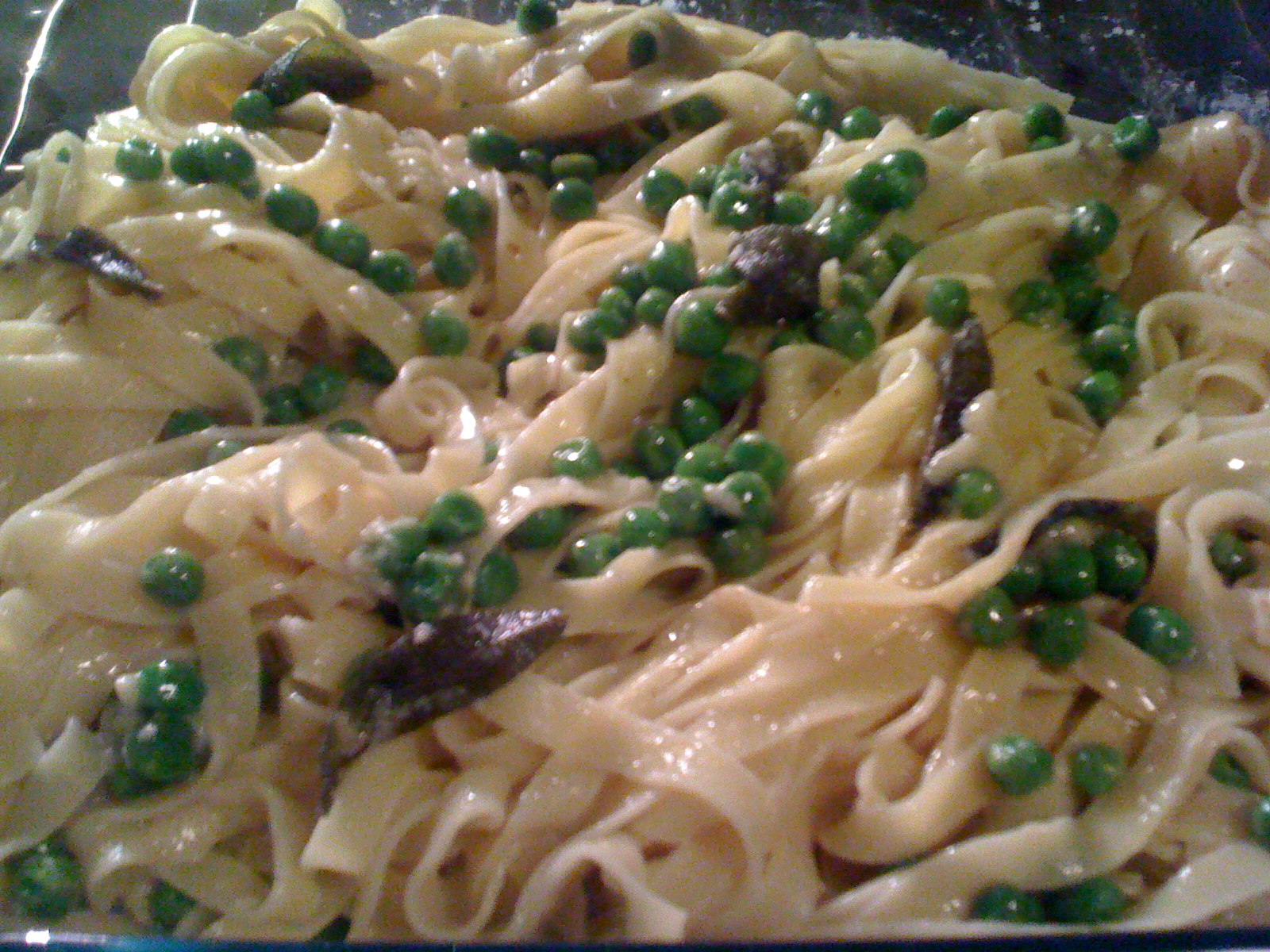
I love cooking.  And I love cooking for and with Dr. S.  But there is something so very delightful about watching Dr. S. cook for me, for us.  I don’t know that I will ever tire of it!  (Remind me to tell you about the recent breakfast he prepared out of dinner leftovers. . .)  So my contribution to this meal preparation was minimal.  Other than picking the aforementioned sage leaves, I tossed the butter sauce onto the pasta, popped it in the oven, and lighted the dining room candles.  Here’s what dinner looked like as it went into the oven . . .

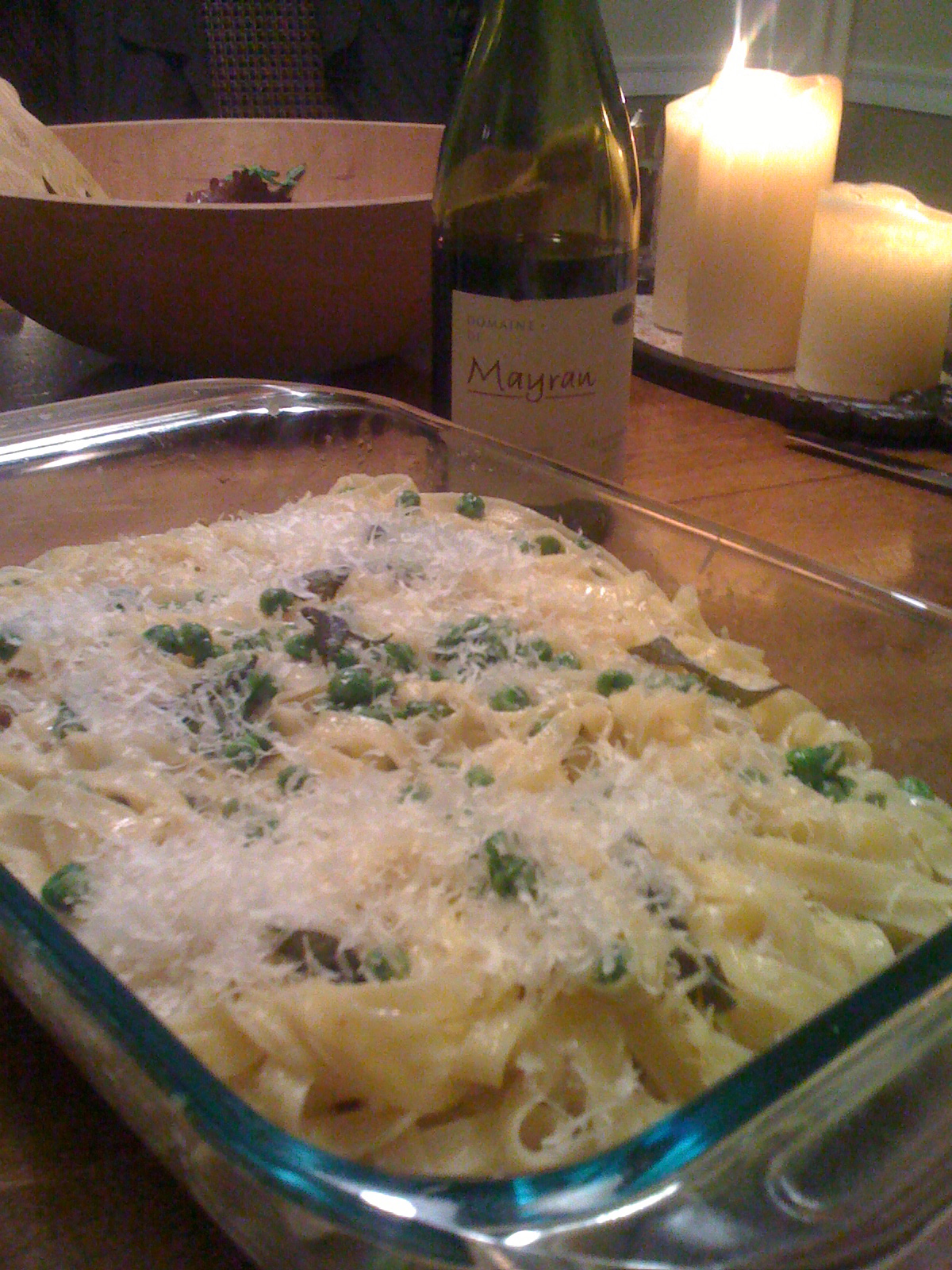
And here’s what it looked like on the table . . .

And in case you’d like your own dish of this comforting pasta next Sunday night, here’s the recipe, courtesy of The NY Times, but with our own secret ingredient added at the end!

Fresh Fettucine with Butter, Peas, and Sage Sauce

1/2 c. butter

12 fresh sage leaves (but you can’t go wrong with more)

1 c. frozen petite peas

salt & freshly ground black pepper

1 lb. fresh fettucine

1/4 lb. Parmesan, grated (about 1 1/2 c.)

Optional:  J’s secret ingredient – Truffle Salt!!!

Preheat the oven to 325 degrees and put the pasta water on.  Melt 1/4 c. of the butter in a small saucepan, and add the sage leaves.  Cook until they’re crisp – but not burnt!  When the butter begins to brown, add the peas and cook, stirring, for 1 minute.  Add 1/4 c. water, cover the saucepan and reduce the heat to low.  Cook for 10 minutes.  Season with salt and pepper to taste.

Cook the fettucine, drain well and, in an ovenproof dish, toss with the remaining 1/4 c. of butter, 1 c. of the grated Parmesan and the pea and sage mixture.  Place in the oven for 5 minutes.  Sprinkle with the remaining Parmesan, and, if the idea does not offend you and you are so fortunate as to have it in your pantry, serve with truffle salt on the side!

Hoping You Had A Zissen Pesach!

Charoset

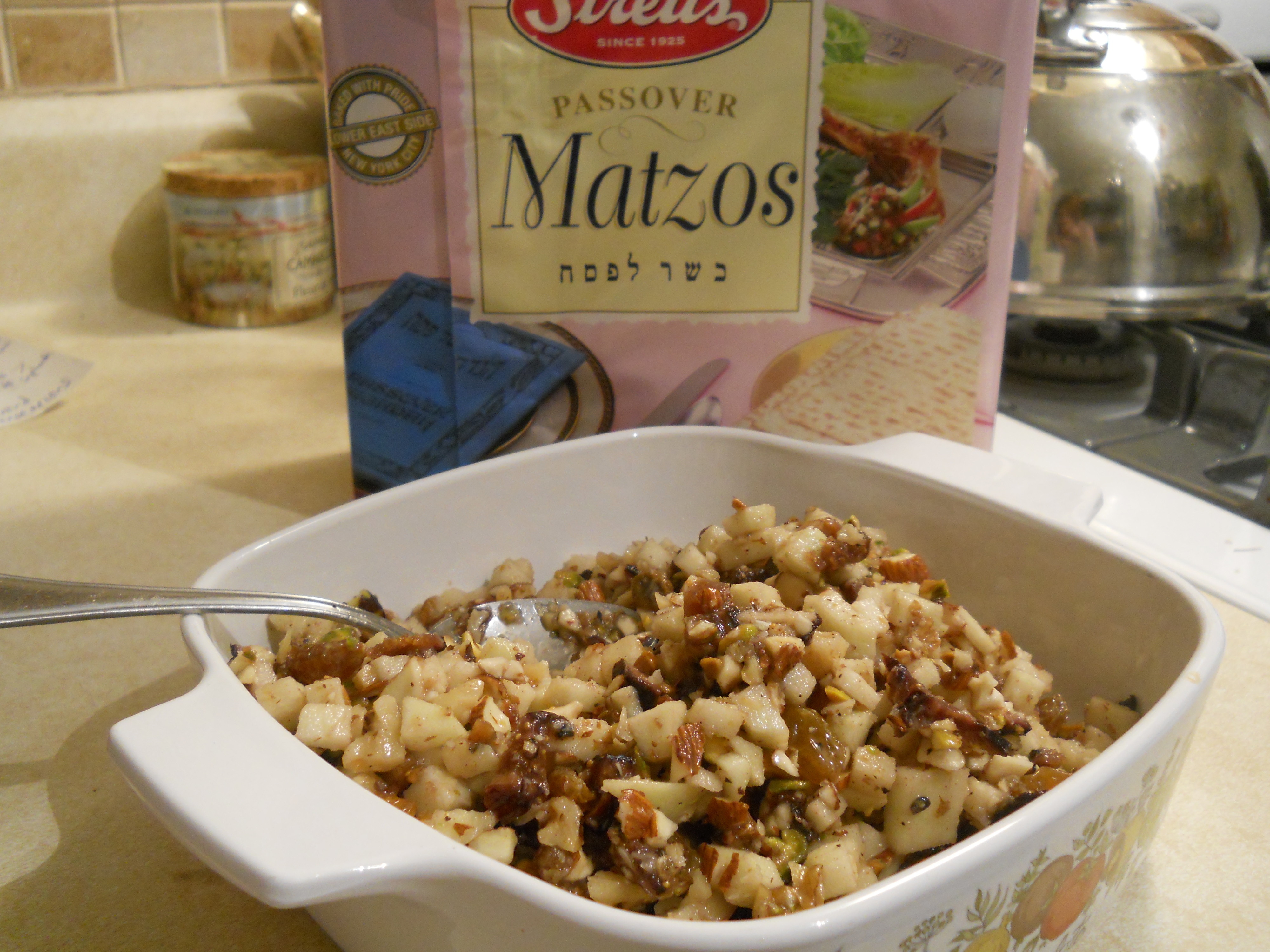
I had meant to have this post finished before the end of Passover, but life intervened.  But here’s hoping that all our Jewish friends and loved ones enjoyed a sweet Passover.   As these special days were approaching, I decided that I would try my hand at a few recipes typically prepared during Passover, and charoset was suggested.  Charoset is a part of the Passover seder plate and symbolizes, in its consistency and color, the mortar used by the Jews to lay bricks during their enslavement in Egypt.   (I know, I know, the version above is not looking particularly mortar-like . . . more on that in a minute.)

I mentioned my upcoming project to a few friends and colleagues.  My colleagues were enthusiastic.  “It’s delicious!” “It tends to be a favorite with the kids!”  But when I shared my plan with Gary, the raisin-hating husband of my best friend, who happens as well to be Jewish, he responded, “Charoset?  Why would you want to make that?”

“It sounds like I might be able to put my own spin on it.  And I’m told it’s delicious!”

“That’s because there’s nothing else to eat at that *&#%$#! meal.”

I shared this response with the charoset suggestor, who responded, “Gary’s been eating at the wrong houses.”

And so, on the first night of Passover, I was in my kitchen chopping and mixing, and eventually serving my daughters a pre-bed snack of charoset on matzo.  And while they were quite complimentary, I was curious as to how my version would fare if tasted by someone who had a seder or two under his belt.  Fortunately, charoset doesn’t really suffer from a couple of days in the fridge, and I was able to save it until my dinner a few nights later with Dr. S.  While sharing that the charosets of his experience were generally more “wet”,  he gave my version a thumbs up. (Yes, I know he’s probably not the most objective taste-tester I could have found, but I do believe he would have told me if I was way off base.)

While researching various recipes, I happened upon the Shiksa in the Kitchen, and learned that the ingredients used in charoset vary in accordance with a family’s tradition.  Ashkenazi Jews tend to use walnuts, apples, and red wine, while pistachios, almonds, and dates are often found in Sephardic versions.  My recipe borrowed a little from both of these traditions.

K’s Charoset

2 large Granny Smith apples, peeled, cored, and diced

1/3 c. walnuts, finely chopped

1/3 c. almonds, finely chopped

1/3 c. pistachios, finely chopped

1/4 c. golden raisins

4 dried Mission figs, chopped

sprinkling of cinnamon

several grindings of black pepper

crushed seeds from 4 cardamom pods

1/4 c. or so of Kedem (kosher red wine)

lavender honey to taste and bind

Mix all of the above together and serve with matzos.  (Or contribute to next year’s Seder!)

Create a free website or blog at WordPress.com.

Up ↑